RTX 5090 vs RTX 4090 for Local LLMs (2026)
RTX 5090 vs RTX 4090 for local AI: verified specs, VRAM, FP4, real performance gap, and current pricing reality. Which flagship to actually buy in 2026.
📋 This article contains affiliate links. We may earn a small commission at no extra cost to you.
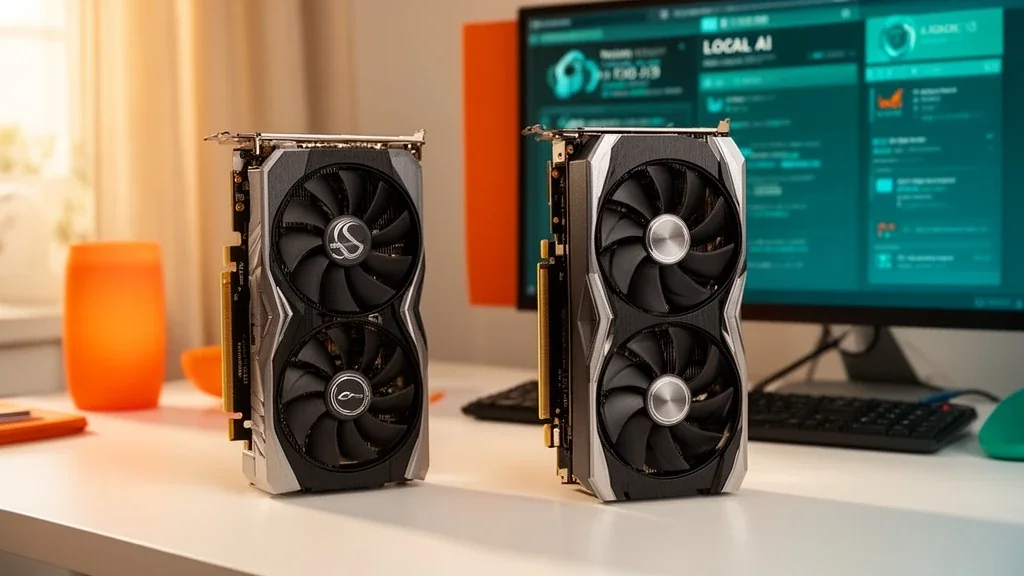
Current product picks
These are current Amazon listings for the GPUs discussed in this guide. Amazon pricing can move faster than the market, especially for discontinued and halo cards.
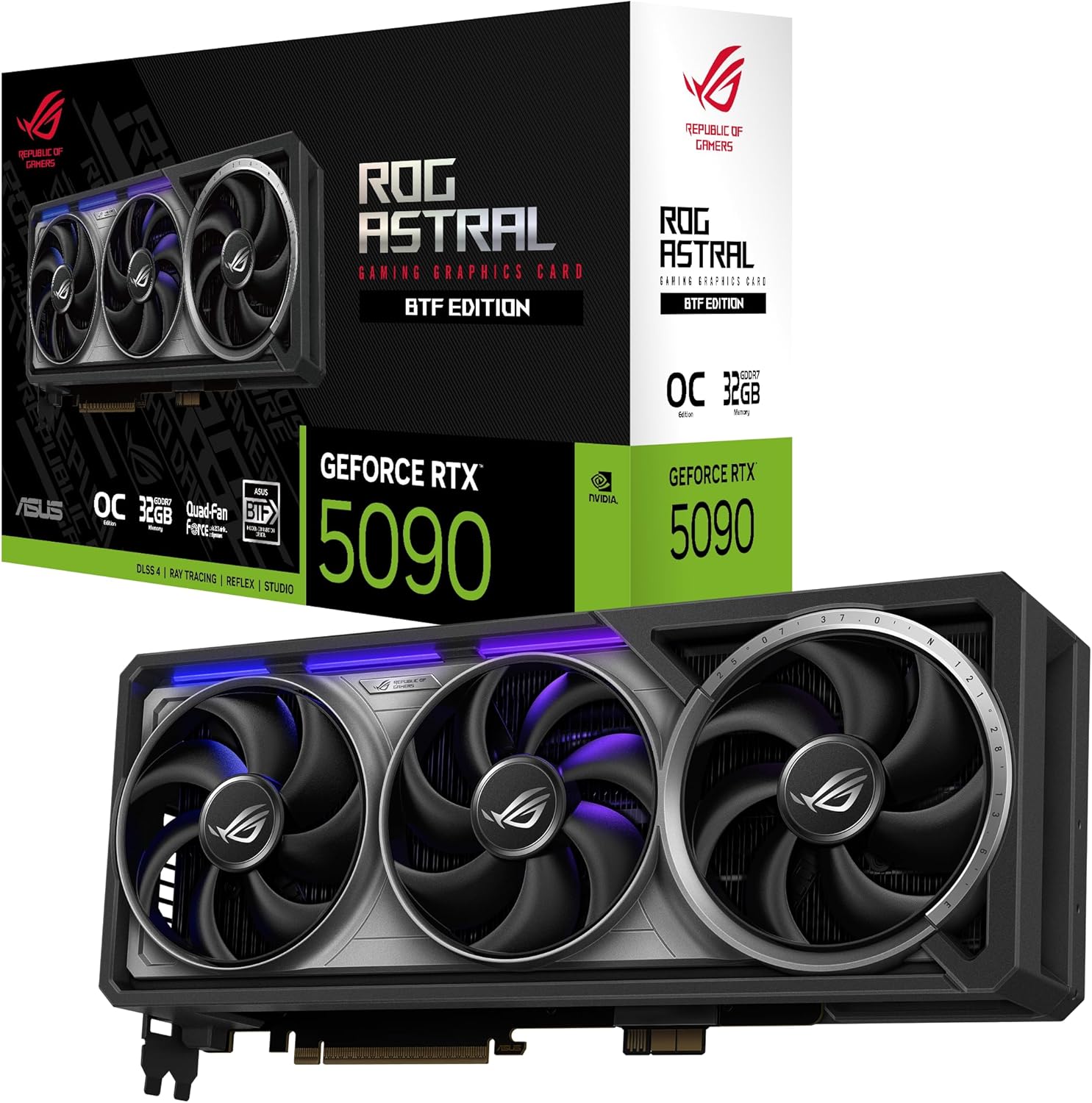
ASUS ROG Astral GeForce RTX 5090 32GB GDDR7
The clear spec winner, but the linked listing was roughly $4,100-4,300 when checked 2026-07-11, far above MSRP.
- VRAM
- 32GB GDDR7
- Current listing
- ~$4,100-4,300
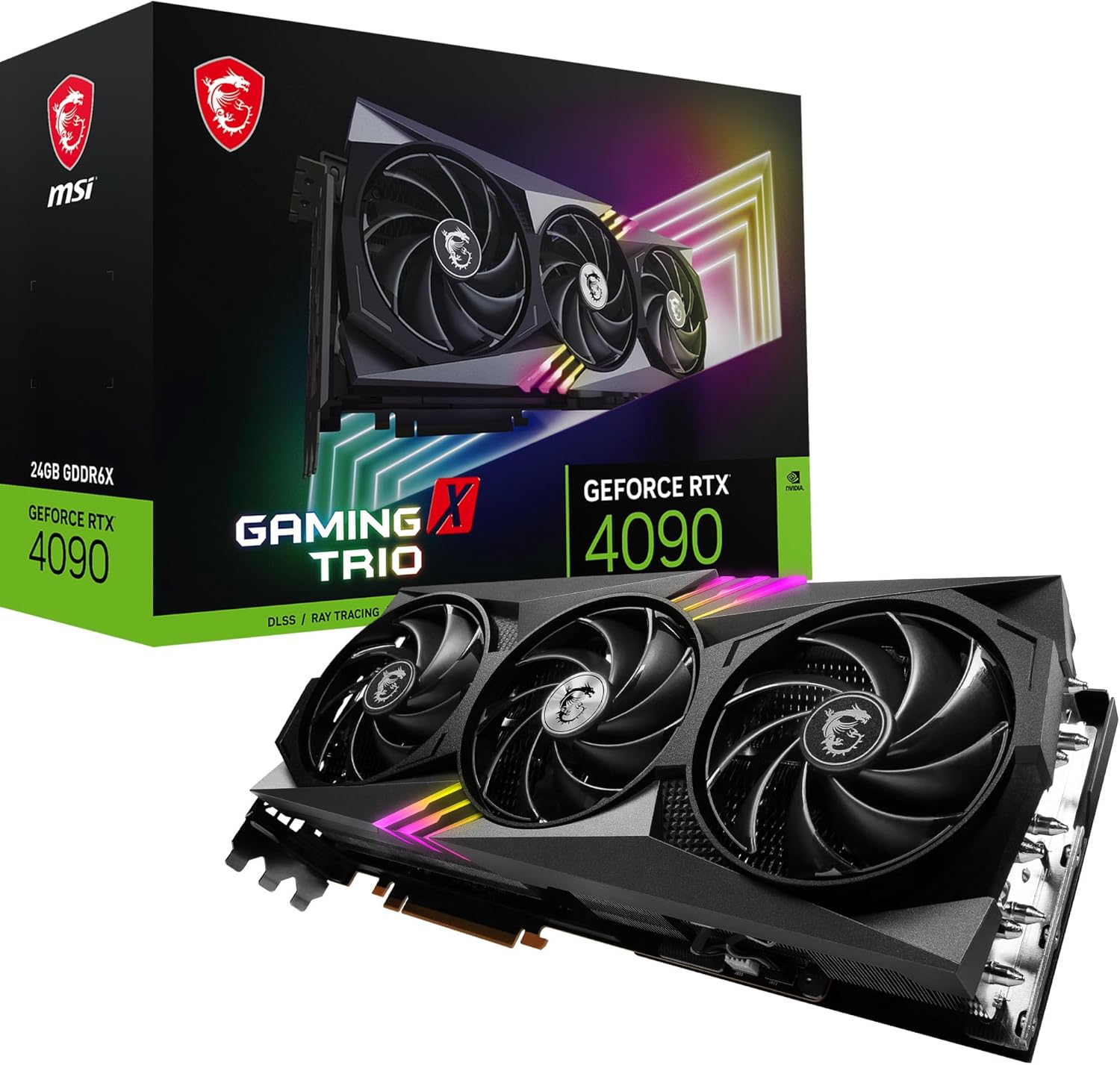
MSI GeForce RTX 4090 Gaming X Trio 24G
Heads up: new 4090 listings have turned collector-priced ($3,500+) since the 5090 launched. The used market is the sane way to buy one now.
- VRAM
- 24GB GDDR6X
- Current listing
- ~$3,400-3,600
This article contains affiliate links. We may earn a small commission at no extra cost to you. All specs are verified against published data.
Quick answer
The RTX 5090 wins the specification comparison: 32GB vs 24GB of VRAM, ~78% more memory bandwidth, and native FP4. But the linked prices reverse the buying case: roughly $4,100-4,300 for the 5090 and $3,400-3,600 for the 4090 when checked 2026-07-11. Buy neither at those listings unless the workload has a measured reason to need the flagship.
If you want the most VRAM and the most speed on a single consumer card, this is the matchup. The RTX 5090 (Blackwell) is a genuine generational jump over the RTX 4090 (Ada Lovelace). The question is whether the jump — and the current prices — justify the spend for your local AI workload.
If you have not settled on a VRAM target yet, read the VRAM requirements guide first, then come back to pick the tier.
The Specs That Matter
| Spec | RTX 5090 | RTX 4090 |
|---|---|---|
| VRAM | 32GB GDDR7 | 24GB GDDR6X |
| Memory bandwidth | 1,792 GB/s | 1,008 GB/s |
| CUDA cores | 21,760 | 16,384 |
| Tensor cores | 680 (5th gen) | 512 (4th gen) |
| Memory bus | 512-bit | 384-bit |
| TDP | 575W | 450W |
| Native FP4 | Yes | No |
| MSRP | $1,999 | $1,599 |
The two numbers that drive local inference are VRAM (what fits) and memory bandwidth (how fast tokens generate). The 5090 leads on both — the 32GB lets a 32B model run at Q8 or leaves real headroom for long context, and the ~78% bandwidth jump is most of why it generates noticeably faster. Independent comparisons put the 5090 at roughly 2–2.5x the AI throughput of the 4090.
What FP4 Actually Means
The 5090’s 5th-gen Tensor Cores add native FP4 support, which the 4090 lacks. It is a real architectural advantage, but a forward-looking one: most local models today run at Q4 (GGUF), FP8, or AWQ INT4, and the FP4 benefit grows as Blackwell-native quantization tooling matures. Do not buy a 5090 for FP4 today; treat it as upside, not the reason.
Real Fit For Local AI
Both cards run the popular tiers, but the headroom differs:
- 7B–14B models: Both are overkill-fast. Identical experience; no reason to pay more here.
- 30–34B models: The 4090 handles them at Q4; the 5090’s 32GB makes them comfortable at higher quantization with real context headroom.
- 70B models: Tight on either at aggressive quantization. The 5090’s 32GB helps but a single card still is not the natural home for 70B — that is dual-GPU or 48GB territory.
So the practical VRAM story: the 5090’s extra 8GB matters most if you live in the 30B+ range or need long context. For everyday 7B–14B chat and coding, it is invisible.
The Pricing Reality (Mid-2026)
This is where the decision actually gets made. MSRP is not the linked checkout reality:
- RTX 5090: the linked listing was roughly $4,100-4,300 when checked 2026-07-11, more than twice MSRP.
- RTX 4090: the linked new listing was roughly $3,400-3,600, also collector pricing.
When both flagships are scarce or marked up, the honest move for most buyers is to drop a tier. See the alternatives below.
Who Should Buy Which
- Buy the RTX 5090 only if you need 32GB on a single card and find an offer much closer to MSRP than the linked listing.
- Buy a used RTX 4090 if you find one well under new-flagship pricing and 24GB is enough for your models. Do not buy a new 4090 at current inflated listings.
- Buy neither if you mostly run 7B–14B models. A new RTX 5070 Ti (16GB) or a used RTX 3090 (24GB) gives you most of the capability for a fraction of the price.
32GB flagship
ASUS ROG Astral GeForce RTX 5090 32GB
The spec winner, but not at the roughly $4,100-4,300 linked range checked 2026-07-11. Read the full RTX 5090 review.
View Amazon listing
24GB, used-market only
MSI GeForce RTX 4090 Gaming X Trio 24G
Only sane as a used buy now — new listings are collector-priced. For value, a used 3090 is the smarter 24GB pick.
View Amazon listingCommon Mistakes
- Buying either linked flagship without comparing checkout prices. Both reviewed listings were collector-priced on 2026-07-11; buy used, find a materially better offer, or drop a tier.
- Paying flagship money to run 7B–14B models. A 16GB card handles those; flagships only earn their price on 30B+ models and heavy generative work.
- Assuming FP4 matters today. Most local models run Q4/FP8/INT4 — treat the 5090’s FP4 as future upside, not the reason to buy.
- Underestimating power. 575W (5090) and 450W (4090) need a strong PSU and real cooling, and cost meaningfully more to run 24/7.
Frequently Asked Questions
Is the RTX 5090 worth it over the 4090 for local AI?
On specs, clearly: 32GB vs 24GB VRAM, more bandwidth, and FP4. At the linked ranges checked 2026-07-11, neither is good value: roughly $4,100-4,300 for the 5090 and $3,400-3,600 for the 4090.
How much faster is the RTX 5090 than the 4090?
Independent comparisons put it at roughly 2–2.5x the AI throughput, driven mostly by the ~78% higher memory bandwidth and more Tensor cores. For interactive chat the difference is “fast” vs “very fast”; for batch/large workloads it is more meaningful.
Does the RTX 4090 support FP4?
No. FP4 is a Blackwell (RTX 50-series) feature via 5th-gen Tensor Cores. The 4090 (Ada Lovelace) runs Q4/FP8/INT4 quantization well, but not native FP4.
Should I buy a new RTX 4090 in 2026?
Generally no. The linked new 4090 range was roughly $3,400-3,600 and the linked 5090 range roughly $4,100-4,300 on 2026-07-11. Buy used or drop a tier unless you find a materially better flagship offer.
Is 24GB enough, or do I need the 5090’s 32GB?
24GB comfortably runs up to 30–34B models at Q4 and everything smaller. The 32GB matters for 30B+ at higher quantization, very long context, or heavier image/video generation. For most local chat and coding, 24GB is plenty.
Last updated: May 2026. Specs verified against published NVIDIA data and independent comparisons; pricing reflects MSRP plus current Amazon listing context, which is volatile for flagship GPUs. We do not publish invented benchmark numbers — throughput figures reference independent and community testing.