RTX 5090 for Local AI Review
A practical review of the RTX 5090 for local LLMs: 32GB of GDDR7, native FP4, the real performance jump over the 4090, and the power and availability caveats.
This article contains affiliate links. We may earn a small commission at no extra cost to you.
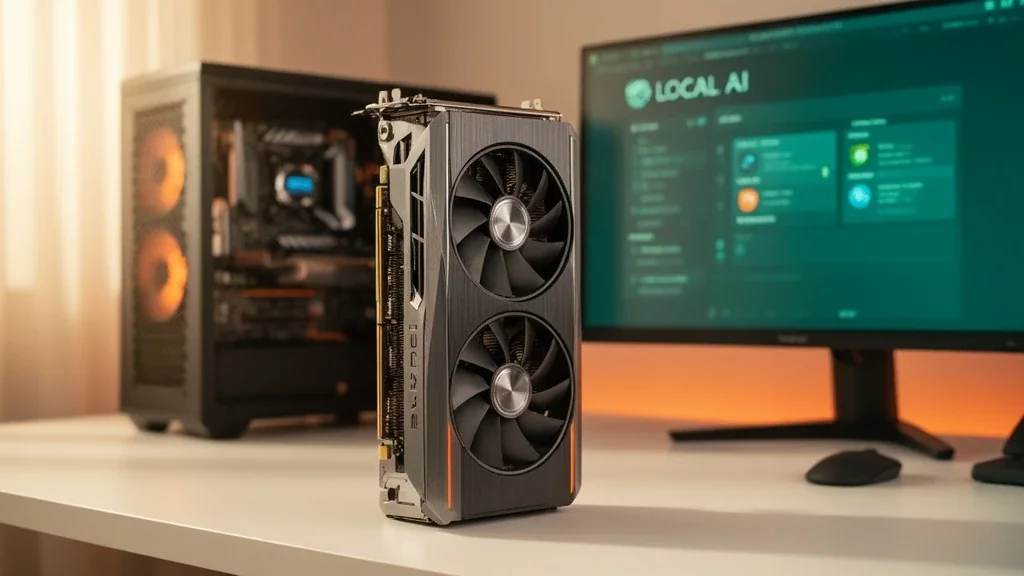
What it gets right
- 32GB of GDDR7 — the most VRAM on a single consumer card
- 1,792 GB/s bandwidth drives roughly 2x the AI throughput of the 4090
- Native FP4 via 5th-gen Tensor Cores, with upside as tooling matures
- Full CUDA support with zero software friction
Where it falls short
- 575W TDP demands a strong PSU and serious cooling
- Linked listing was roughly $4,100-4,300 on 2026-07-11, more than twice MSRP
- Overkill and poor value if you only run 7B-14B models
- A single card still is not the natural home for 70B models
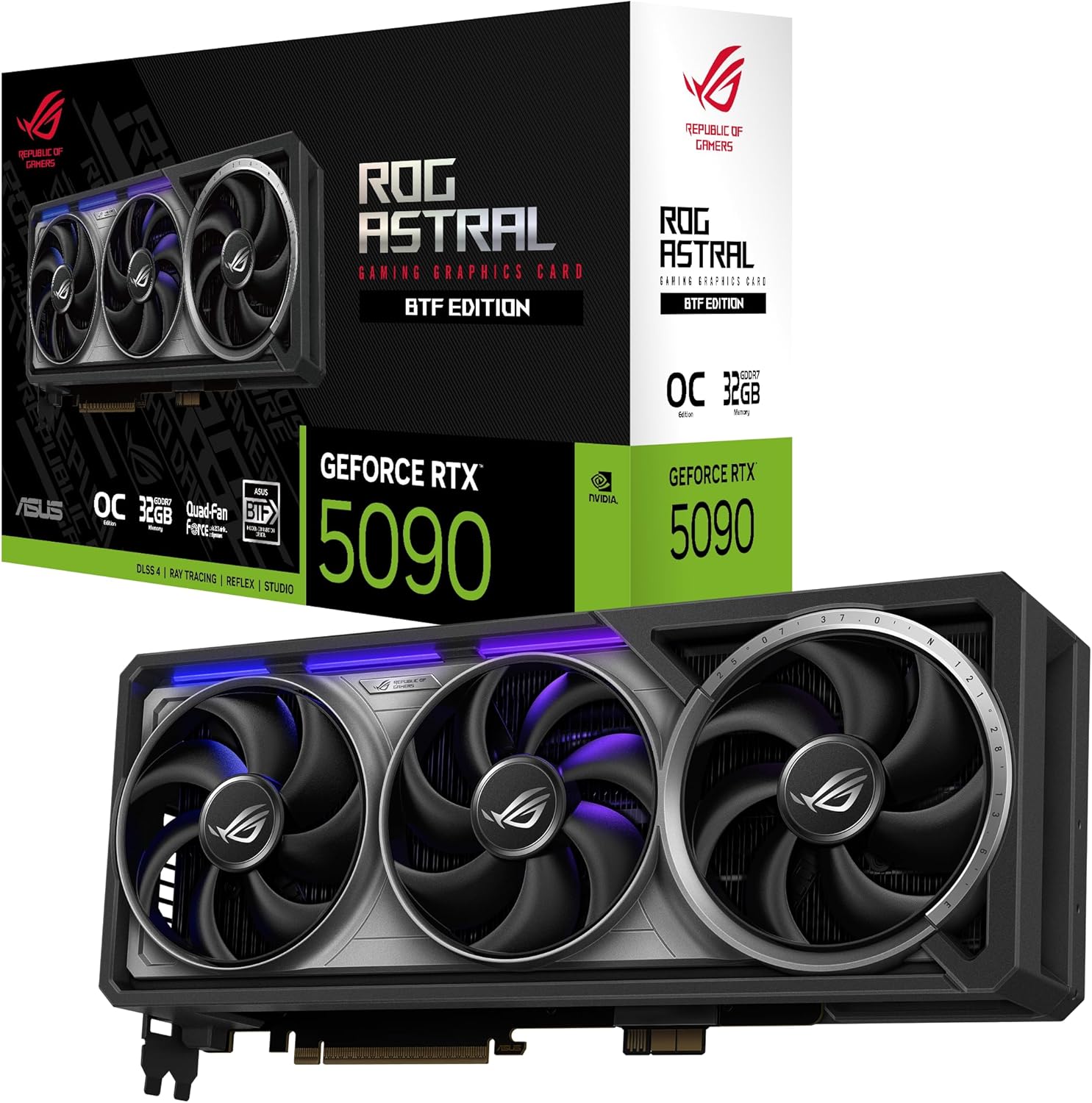
Where to buy this GPU
This is the current Amazon listing we validated for this review. For older or niche GPUs, Amazon availability and pricing can drift above the broader market.
- VRAM
- 32GB GDDR7
- Current listing
- ~$4,100-4,300 linked listing
This article contains affiliate links. We may earn a small commission at no extra cost to you. Specs are verified against published NVIDIA data.
Quick verdict
The RTX 5090 is the most capable single consumer GPU for local AI, but the linked listing was roughly $4,100-4,300 when checked 2026-07-11. Buy only if you need 32GB on one card and find a materially better offer; otherwise its 575W draw and more-than-double-MSRP listing make it poor value.
The RTX 5090 is the no-compromise option for local AI, and this review treats it as exactly that: the card you buy when VRAM and speed matter more than value. The question is not whether it is good — it clearly is — but whether its 32GB justifies the price, power, and the hunt to actually buy one.
For the head-to-head with last gen, see our RTX 5090 vs RTX 4090 comparison.
Quick Verdict
If you want the most capable single consumer GPU for local AI, this is it. The 32GB of VRAM is the headline. The downsides are practical and decisive: 575W of power and a linked price roughly $4,100-4,300 on 2026-07-11. Capability does not make that listing good value.
Specs That Matter For Local AI
| Spec | RTX 5090 |
|---|---|
| VRAM | 32GB GDDR7 |
| Memory bandwidth | ~1,792 GB/s |
| CUDA cores | 21,760 |
| Tensor cores | 680 (5th gen) |
| Native FP4 | Yes |
| TDP | 575W |
| Interface | PCIe 5.0 |
For local inference, the 32GB of VRAM and ~1,792 GB/s bandwidth are the whole story: the memory decides what fits, and the bandwidth — about 78% more than the 4090 — is most of why it generates faster. The native FP4 support is genuine upside, though most local models run Q4/FP8/INT4 today, so treat FP4 as a bonus that grows over time rather than the reason to buy.
Real Fit And Limits
- 7B–14B models: Blisteringly fast, but any 16GB card runs these. You are not buying a 5090 for this tier.
- 30–34B models: This is where the 5090 shines — comfortable at high quantization with room for long context, where a 24GB card has to compromise.
- 70B models: Possible at aggressive quantization, but a single card still is not the natural home for 70B. That remains dual-GPU or 48GB territory.
- Image and video generation: The 32GB and bandwidth are a real advantage for FLUX, SD3.5, and local video models.
The honest limit is value, not capability. The 5090 does everything a consumer card can, but the jump from a 24GB card only pays off if you actually live in the 30B+ range or do heavy generative work.
Power, Thermals, Noise, And Upgrades
The 575W TDP is the practical cost of all that performance. You need a quality 1000W+ PSU, a case with real airflow, and a tolerance for the heat and noise of a flagship card under sustained load. For an always-on rig, factor the electricity — at 575W it is one of the most expensive cards to run 24/7 (check the electricity cost calculator). Multi-card setups still require software sharding; the 50-series also lacks NVLink for higher-bandwidth inter-GPU transfers.
Pros And Cons
The summary cards capture it: unmatched single-card VRAM and throughput plus FP4 and CUDA, against 575W draw, thin availability at or above MSRP, and poor value for small models. The cons are real but do not detract from what it is — the ceiling for single-GPU local AI.
Who Should Buy It
- Buy it only if you need 32GB on one card, can power 575W, and find an offer materially below the linked $4,100-4,300 range.
- Skip it if your models are 7B–14B, value matters, or the linked halo pricing is your only available offer.
32GB single-card ceiling
ASUS ROG Astral GeForce RTX 5090 32GB
The most VRAM and speed on one consumer card, but the linked range was roughly $4,100-4,300 on 2026-07-11. See 5090 vs 4090.
View Amazon listingFrequently Asked Questions
Is the RTX 5090 worth it for local AI?
If you need 32GB on one card and can find an offer materially below the roughly $4,100-4,300 linked range, it can make sense. For 7B–14B models it is overkill, and 575W plus more-than-double-MSRP pricing are decisive obstacles.
How much VRAM does the RTX 5090 have?
32GB of GDDR7 — the most on any consumer card. That runs 30B-class models at high quantization with long-context headroom, and 70B at aggressive quantization on a single card.
How much faster is the RTX 5090 than the 4090 for AI?
Roughly 2x the AI throughput in independent comparisons, driven mainly by ~78% more memory bandwidth and more Tensor cores. See our 5090 vs 4090 comparison.
What power supply does the RTX 5090 need?
Plan for a quality 1000W+ PSU. At 575W TDP it is power-hungry and needs strong case airflow; it is also expensive to run continuously, so factor electricity for an always-on rig.
Should I buy a 5090 or a used 3090 for local AI?
Choose the 5090 only for a concrete 32GB requirement and a materially better offer than the linked range. For 24GB CUDA, compare the renewed 3090 against new AMD and private used offers; neither model is a value winner independent of price.
Last updated: July 11, 2026. Specs use published NVIDIA data; the linked Amazon range was revalidated through Apify. Performance figures reference independent testing, not invented numbers.