Best GPU for Local AI Under $1,000 (2026)
The best GPUs for local AI under $1,000 in 2026: available 16GB options plus the conditions a private-market RTX 3090 must meet to qualify.
📋 This article contains affiliate links. We may earn a small commission at no extra cost to you.
Current product picks
These are current Amazon listings for the GPUs discussed in this guide. Amazon pricing can move faster than the market, especially for discontinued and halo cards.
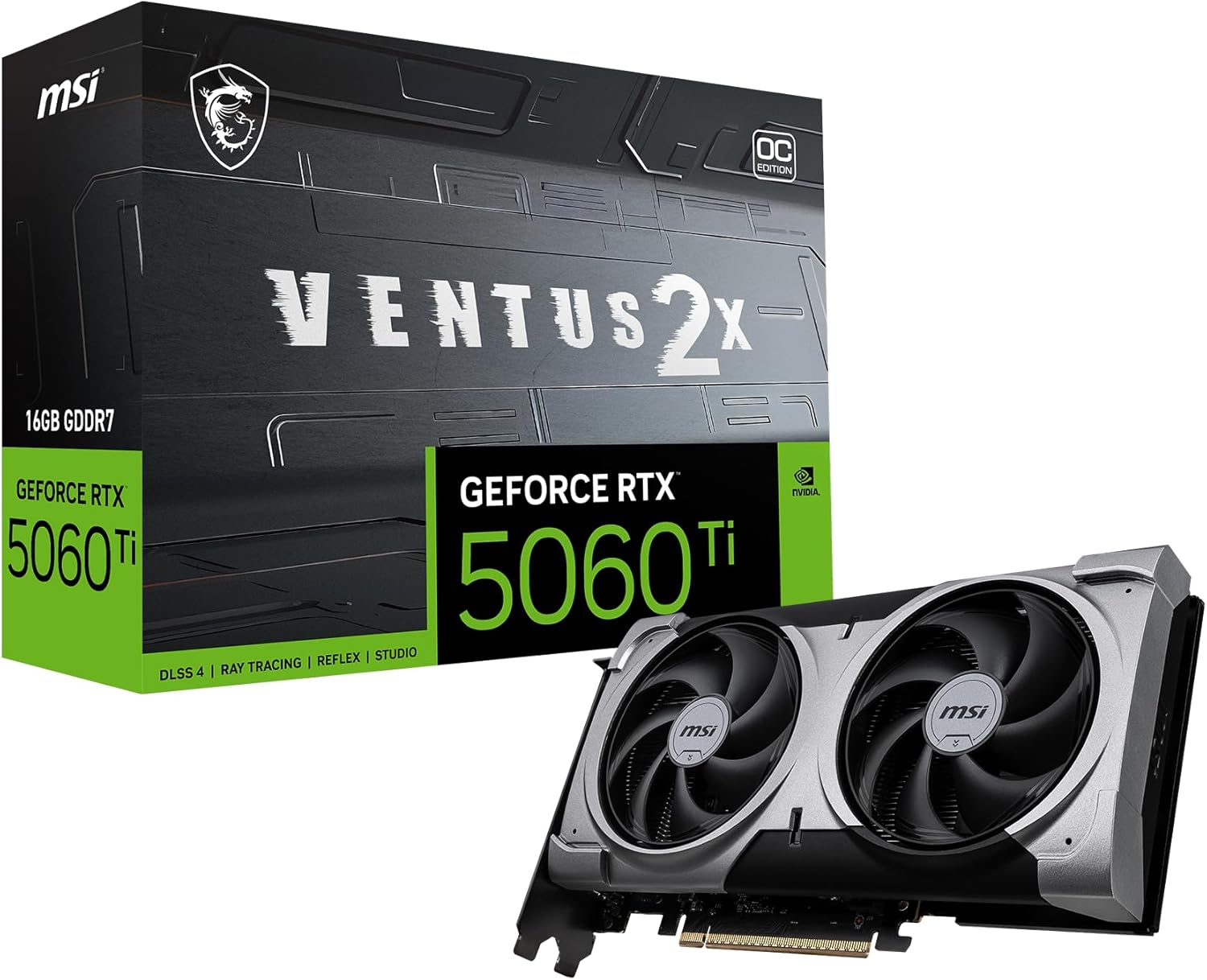
MSI RTX 5060 Ti 16G Ventus 2X OC Plus
Current-gen 16GB at ~150W, but this exact linked SKU was out of stock when checked 2026-07-11.
- VRAM
- 16GB GDDR7
- Current listing
- Out of stock (checked 2026-07-11)
This article contains affiliate links. We may earn a small commission at no extra cost to you. All recommendations are based on verified specs and current research.
Quick answer
Under $1,000, a used RTX 3090 is the 24GB target only when the exact private-market offer, condition, and return terms pass inspection. The Amazon-renewed range linked elsewhere on this site was roughly $1,500-1,700 on 2026-07-11, so it is not an under-$1,000 recommendation. For 7B–14B models, compare current 16GB listings and buy only when the checkout price stays inside your budget.
A $1,000 ceiling normally buys a current-generation 16GB card. Reaching 24GB requires finding a verifiable private-market RTX 3090 below budget; the renewed listing checked here costs substantially more. Which tier is right depends on the models you run, and several cards currently list above MSRP.
If you have not set a VRAM target yet, start with the 16GB vs 24GB guide or the VRAM calculator.
Quick Answer — Top Picks
| GPU | VRAM | Best for | Price context |
|---|---|---|---|
| Used RTX 3090 | 24GB | Most VRAM, 30B models | Only a qualifying private-market offer below $1,000 |
| RTX 5070 Ti | 16GB GDDR7 | Fastest new card | ~$749 MSRP (listings higher) |
| RX 7900 XTX | 24GB | AMD 24GB (Linux) | Linked range ~$1,350–1,450; excluded from this budget |
| RX 9070 XT | 16GB | New AMD value, in stock | ~$649 |
| RTX 5060 Ti 16GB | 16GB GDDR7 | Low-power always-on | Exact SKU out of stock 2026-07-11 |
1. Used RTX 3090 — Best VRAM Under $1,000
VRAM: 24GB GDDR6X | Budget rule: verify the exact offer is below $1,000 | TDP: 350W
Among plausible consumer-GPU offers, a private-market RTX 3090 is the route to investigate for 24GB below this ceiling. Its 24GB runs 30–34B models comfortably at Q4 and 70B at aggressive quantization, but only an actual inspected offer below $1,000 belongs in this guide.
The tradeoffs are real: you are buying used (inspect it — see our used RTX 3090 buying guide), and 350W is a lot for an always-on rig. Compare the exact offer rather than assuming the old market price still exists.
The renewed Amazon offer is deliberately not linked as an under-$1,000 pick: its range was roughly $1,500-1,700 when checked 2026-07-11. Use the used RTX 3090 buying checklist to evaluate a genuinely in-budget private listing.
2. RTX 5070 Ti — Best New Card (16GB)
VRAM: 16GB GDDR7 | MSRP: ~$749 | TDP: 300W
The RTX 5070 Ti is the best new card under $1,000 by MSRP: Blackwell architecture, 16GB of fast GDDR7 at ~896 GB/s, and 8,960 CUDA cores. It runs 7B–14B models at 90–120+ tokens/sec and matches a used 3090 on raw speed while costing less and drawing less power.
The honest caveat: at $749 MSRP it is excellent value, but current Amazon listings frequently sit at ~$1,000+, which pushes it past this budget. Buy it when you can get it near MSRP; otherwise the used 3090 (more VRAM) or a 16GB card lower down is the better spend today.
3. RX 7900 XTX — Excluded at the Linked Price
VRAM: 24GB GDDR6 | Linked range: ~$1,350–1,450 | TDP: 355W
For a Linux-first builder, the RX 7900 XTX supplies 24GB with ROCm, but the linked range was roughly $1,350-1,450 when checked. That puts it outside this guide’s budget, so it is not linked as a pick here. Read the NVIDIA vs AMD guide if your budget can stretch.
4. RX 9070 XT — Best In-Stock AMD Value (16GB)
VRAM: 16GB | Price: ~$649 | Architecture: RDNA 4
AMD’s current-gen mid-range, widely in stock around $649, is a sensible new 16GB option if you want an AMD card and 16GB covers your models. As with any AMD pick, plan for Linux and some ROCm setup.
5. RTX 5060 Ti 16GB — Best Low-Power Always-On
VRAM: 16GB GDDR7 | Availability: exact SKU out of stock 2026-07-11 | TDP: ~150W
If your models are 7B–14B and you want a quiet, efficient box, the RTX 5060 Ti 16GB tier is a sensible fit: current-gen 16GB, CUDA support, and ~150W draw. The exact linked MSI SKU was out of stock on 2026-07-11, so verify another 16GB listing before treating it as the available pick. (Full breakdown in our RTX 5060 Ti 16GB review.)
Best low-power 16GB
MSI RTX 5060 Ti 16G Ventus 2X OC Plus
Current-gen 16GB GDDR7 at ~150W, but this exact SKU was out of stock when checked 2026-07-11. Use the listing to verify availability or compare another 16GB model.
Check availabilityWho Should Buy What
- Run 30B+ models or want maximum headroom: only a private-market RTX 3090 that is truly below budget and passes inspection.
- Want the fastest new card and run ≤14B models: RTX 5070 Ti (16GB), at MSRP.
- Linux-first and want an available sub-$1,000 option: verify an RX 9070 XT or another 16GB AMD listing; the linked RX 7900 XTX is over budget.
- Low-power always-on box for ≤14B models: compare an available RTX 5060 Ti 16GB SKU; the exact linked SKU is out of stock.
- Tighter budget: drop to the budget GPU guide, which covers the under-$500 and under-$300 bands — the Intel Arc B580 (12GB, ~$309) is the entry point.
The Quick Recap
If you read this far and just want the answer: a used RTX 3090 is the 24GB choice only when the actual offer is below $1,000; do not substitute the roughly $1,500-1,700 renewed range. For a low-power 16GB card, use the RTX 5060 Ti 16GB listing only to check whether stock has returned or compare another SKU. Confirm what fits first with the VRAM calculator, then use the used RTX 3090 review or RTX 5060 Ti review for the tradeoffs.
Common Mistakes
- Paying inflated Amazon prices for the 5070 Ti. It is excellent at its $749 MSRP but frequently lists at $1,000+. Buy it near MSRP, or pick another card on this list.
- Buying a new RTX 4090 for its 24GB. New 4090s are collector-priced now; a used RTX 3090 gives you the same 24GB for far less.
- Choosing 16GB when you actually need 30B models. Under $1,000, the 30B-class tier means 24GB — a used 3090. See 16GB vs 24GB VRAM.
- Ignoring power and used-market risk. The 24GB picks (used 3090, 7900 XTX) draw 350W+, and the 3090 is a used buy — factor both before you commit.
Frequently Asked Questions
What is the best GPU for local AI under $1,000?
For 24GB, buy an RTX 3090 only when a verifiable private-market listing is actually below $1,000; the linked renewed range was roughly $1,500-1,700 on 2026-07-11 and does not qualify. For 7B–14B models, compare current 16GB listings instead of buying on MSRP alone.
Is a used RTX 3090 still worth it in 2026?
Only when the exact private-market offer is below budget and passes inspection. The linked renewed range was roughly $1,500-1,700 on 2026-07-11, so it is not an under-$1,000 recommendation.
Should I buy the RTX 5070 Ti for local AI?
It is the best new card under $1,000 by MSRP — fast 16GB GDDR7, low power, full CUDA support. The catch is availability: listings often run above the $749 MSRP, so it is only the value pick when you can buy near MSRP.
Is AMD a good choice under $1,000?
For Linux users, AMD can work well, but verify the checkout price. The linked RX 7900 XTX range was above $1,000, so this budget currently points to a qualifying 16GB card such as an RX 9070 XT rather than that 24GB listing. Expect ROCm setup work and weaker image/video support than NVIDIA — see our NVIDIA vs AMD guide.
16GB or 24GB if I only have $1,000?
If your models are 14B or smaller, compare available 16GB cards. If you need 24GB, the only plausible route below this ceiling is a private-market RTX 3090 that passes inspection; the linked renewed listing does not qualify. See 16GB vs 24GB VRAM.
Last updated: July 11, 2026. Specs were checked against published data; product-card availability and linked price ranges were validated through Amazon data on that date. Private-market prices remain variable. We do not publish invented benchmarks — throughput figures reference independent and community testing.