RTX 3090 (Used) for Local AI Review
A practical review of the used RTX 3090 for local LLMs: 24GB of VRAM, model fit, power draw, current renewed pricing, and used-market caveats.
This article contains affiliate links. We may earn a small commission at no extra cost to you.
What it gets right
- 24GB of CUDA-capable VRAM for 30-34B-class local models
- Runs 30-34B models comfortably and 70B at aggressive quantization
- The last consumer GeForce card with NVLink for faster sharded dual-GPU transfers
- Full CUDA support means zero software friction
Where it falls short
- 350W TDP is a lot for an always-on rig
- You are buying used — condition and seller risk vary
- About 70-80% of RTX 4090 token speed, not a speed champion
- Renewed Amazon listings cost far more than the private used market
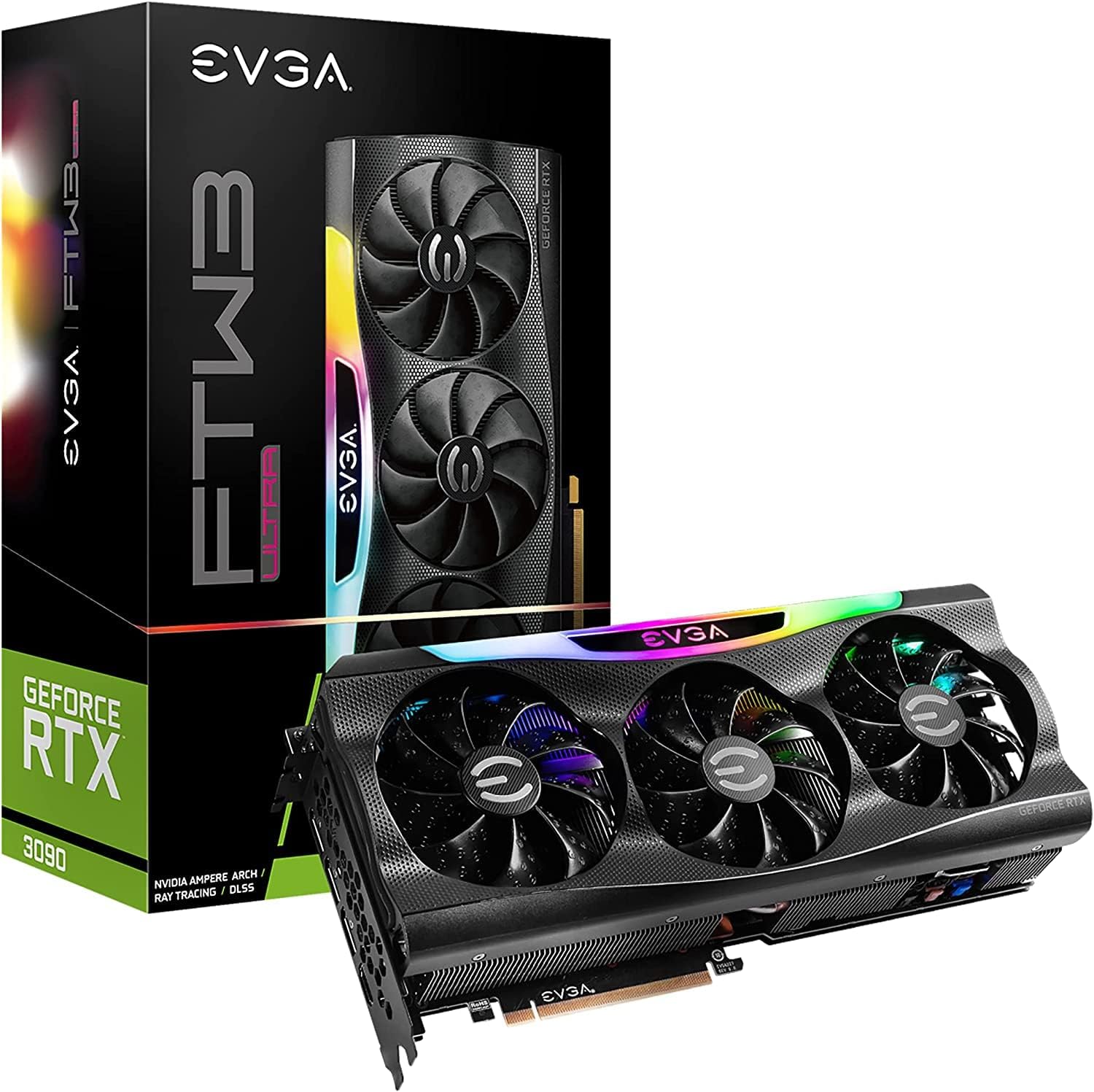
Where to buy this GPU
This is the current Amazon listing we validated for this review. For older or niche GPUs, Amazon availability and pricing can drift above the broader market.
- VRAM
- 24GB GDDR6X
- Current listing
- ~$1,500-1,700 renewed
This article contains affiliate links. We may earn a small commission at no extra cost to you. Specs are verified against the product listing and NVIDIA reference data.
Quick verdict
The RTX 3090 remains a practical 24GB CUDA card for 30–34B models, but it is not automatically the value winner. The linked renewed range was roughly $1,500-1,700 when checked 2026-07-11. Compare the exact price against new 24GB AMD cards and private used offers, then account for 350W power draw, condition, and return coverage.
The RTX 3090 remains relevant because it provides 24GB of CUDA-capable VRAM, but the old sub-$1,000 assumption no longer describes the renewed listing linked here. This review is about when the capability still justifies the current price and what you sign up for when buying one used.
If you want the broader buying process (inspection, where to buy, NVLink), pair this with our used RTX 3090 buying guide.
Quick Verdict
If your goal is 30B-class models on CUDA, the RTX 3090’s 24GB remains useful. It is no longer an automatic value pick: compare the exact renewed or private-market price against new 24GB AMD options, then decide whether CUDA compatibility is worth the premium and used-hardware risk.
Specs That Matter For Local AI
| Spec | RTX 3090 |
|---|---|
| VRAM | 24GB GDDR6X |
| Memory bandwidth | ~936 GB/s |
| CUDA cores | 10,496 |
| TDP | 350W |
| NVLink | Yes (last consumer card with it) |
| Interface | PCIe 4.0 |
For local inference, VRAM is the headline and bandwidth is the supporting act. The 24GB lets models fit; the ~936 GB/s keeps generation reasonably quick. The CUDA core count is two generations old, which is why it trails newer cards on raw throughput — but for interactive chat and coding, the difference is seconds, not minutes.
Real Fit And Limits
- 7B–14B models: Trivially easy, fast. But you are not buying a 3090 for these — a cheaper 16GB card handles them.
- 30–34B models: This is the point. The 3090 runs them comfortably at Q4 with room for context — the capability that justifies the purchase.
- 70B models: Workable at aggressive quantization on one card, or at better quantization when a supported runtime shards the model across two 24GB cards. NVLink improves transfers but does not create one transparent 48GB GPU.
- Image and video generation: 24GB is generous headroom for SDXL, FLUX, and most local video models.
The honest limit is speed, not capability. The 3090 runs at roughly 70–80% of an RTX 4090’s token-generation rate. In practice that is “responses in 3 seconds instead of 2” — fine for interactive use, less ideal for heavy batch workloads where throughput compounds.
Power, Thermals, Noise, And Upgrades
The 3090’s 350W TDP is its biggest practical downside. For an always-on rig, that is real money — run your numbers in the electricity cost calculator before committing. It also means you need a quality 750W+ PSU and decent case airflow.
A known 3090 quirk: the GDDR6X memory modules run hot, and on used cards the thermal pads may be dried out, pushing memory-junction temperatures high under sustained load. It is fixable with a pad replacement, but worth checking — test memory temps on arrival. For a dual-GPU route, software must shard the model across both cards; NVLink improves communication but does not merge their VRAM into one device.
Pros And Cons
The summary cards at the top capture it: unbeaten VRAM-per-dollar and full CUDA support, against 350W draw, used-market risk, and middling speed versus current flagships. None of the cons are dealbreakers if you want 24GB on a budget — they are the price of admission.
Who Should Buy It
- Buy it if you want 30B-class models or a 48GB dual-GPU path, value VRAM over raw speed, and can inspect a used card. It is the best value pick on this site for serious local AI.
- Skip it if your models are 14B or smaller (a new RTX 5060 Ti 16GB is cheaper, cooler, and current-gen), if you need a low-power always-on box, or if you want a warranty and zero hassle.
Best VRAM-per-dollar
EVGA GeForce RTX 3090 FTW3 Ultra (Renewed)
24GB with CUDA and Amazon-renewed return coverage. The linked range was roughly $1,500–1,700 when checked 2026-07-11; inspect private alternatives using the used RTX 3090 buying guide.
View Amazon listingFrequently Asked Questions
Is the used RTX 3090 still the best value for local AI in 2026?
Only when the exact used price beats current alternatives. The RTX 3090 gives you 24GB and CUDA for 30B-class models, but the linked renewed range was roughly $1,500–1,700 on 2026-07-11. Compare it against new 24GB AMD cards and private offers before calling it the value winner.
How does the RTX 3090 compare to the 4090 for AI?
Both have 24GB and run the same model tiers. The 4090 is about 20–30% faster but costs far more (and new 4090s are now collector-priced). For value, the used 3090 wins; for speed and a warranty, the 4090.
How much VRAM does the RTX 3090 have, and what can it run?
24GB GDDR6X. That runs 30–34B models comfortably at Q4, 70B at aggressive quantization (or comfortably across two cards via NVLink), and all common image/video generation.
Is the RTX 3090’s power draw a problem?
It can be. At 350W it costs noticeably more to run 24/7 than a 150W card and needs a solid PSU and airflow. For occasional use it is fine; for an always-on server, factor the electricity.
What should I check when buying a used RTX 3090?
Test it immediately, watch memory-junction temperatures under load (dried-out thermal pads are a known issue), inspect for damage, and buy with a return option. See our used RTX 3090 buying guide.
Last updated: May 2026. Specs verified against the product listing and NVIDIA reference data; used-market prices are estimates that move with supply. Performance figures reference independent and community testing, not invented numbers.