RTX 5070 Ti for Local AI Review
A practical review of the RTX 5070 Ti for local LLMs and image generation: fast 16GB GDDR7, low power, full CUDA — and whether its price holds up versus MSRP.
This article contains affiliate links. We may earn a small commission at no extra cost to you.
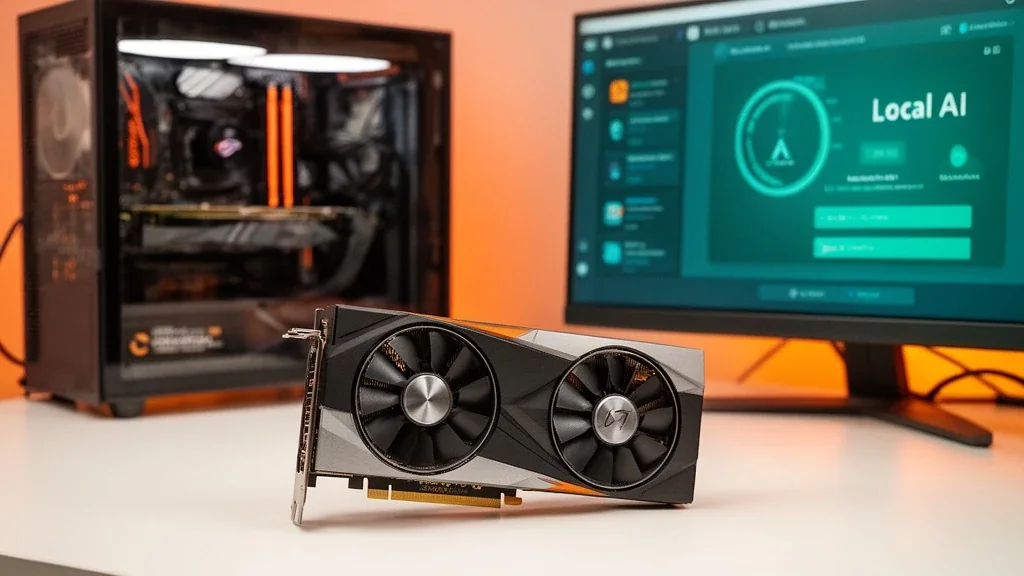
What it gets right
- 16GB of fast GDDR7 at ~896 GB/s — quick for a 16GB card
- Runs 7B-14B models at high speed and SDXL/FLUX (FP8) well
- 300W and current-gen, with full zero-friction CUDA support
- The fastest new card under $1,000 by MSRP
Where it falls short
- Listings frequently sit above the $749 MSRP (often $1,000+)
- 16GB caps it below 30B-class models
- A used RTX 3090 gives more VRAM (24GB) for similar money
- No NVLink for higher-bandwidth communication in sharded multi-GPU setups
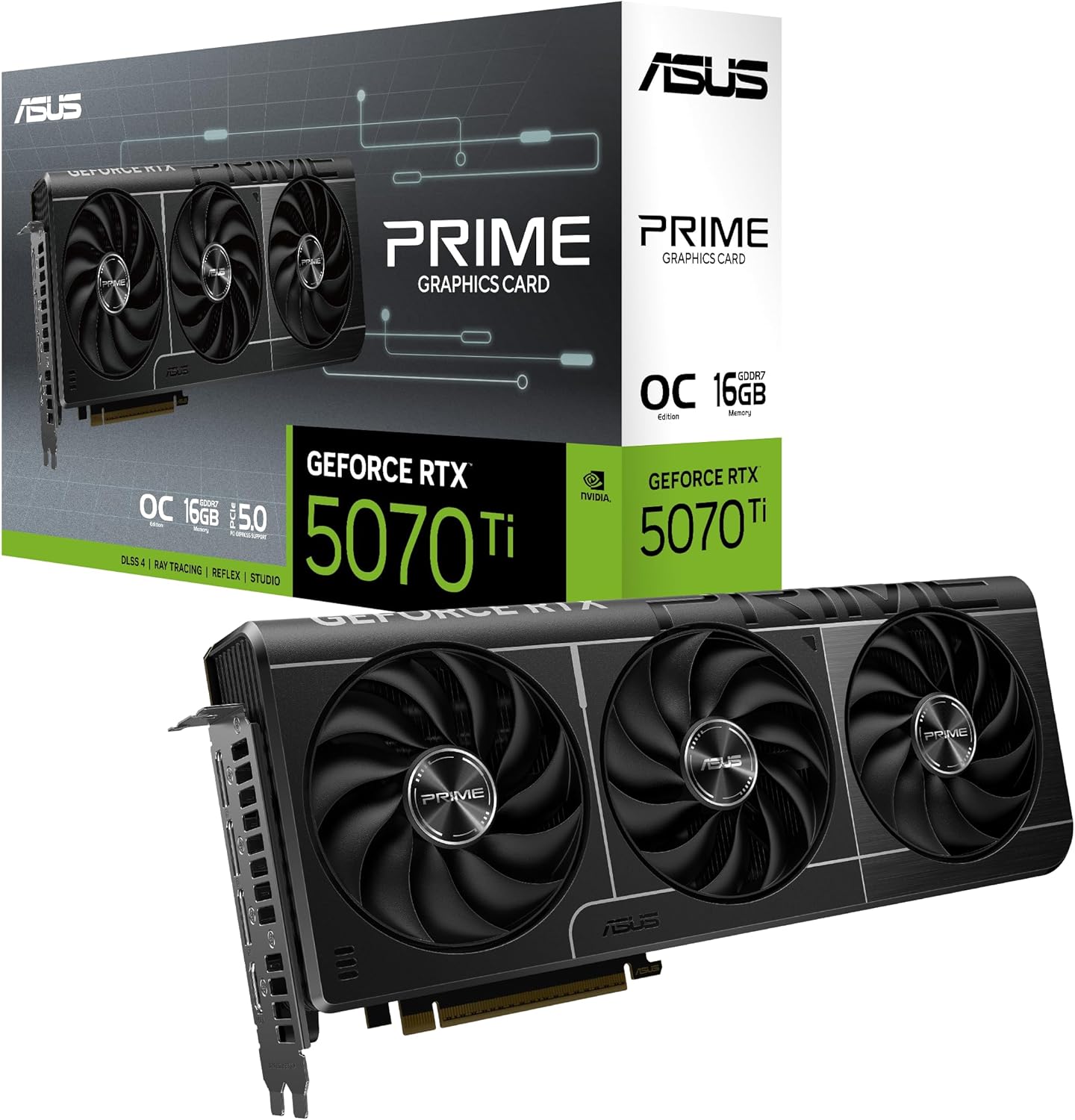
Where to buy this GPU
This is the current Amazon listing we validated for this review. For older or niche GPUs, Amazon availability and pricing can drift above the broader market.
- VRAM
- 16GB GDDR7
- Current listing
- ~$749 MSRP ($1,009 current listing)
This article contains affiliate links. We may earn a small commission at no extra cost to you. Specs are verified against the product listing and NVIDIA reference data.
Quick verdict
The RTX 5070 Ti is the fastest new 16GB card for local AI: 16GB of GDDR7 at ~896 GB/s, Blackwell architecture, 300W, and zero CUDA friction. It runs 7B–14B models quickly and handles SDXL and FLUX (FP8) well. The whole decision is price — at its $749 MSRP it is excellent value, but listings frequently sit above $1,000, where a used RTX 3090 (24GB) or the cheaper RTX 5060 Ti 16GB make more sense. Buy it near MSRP; skip it at inflated prices.
The RTX 5070 Ti is the card a lot of people should want: current-generation, fast, efficient, and 16GB — enough for the models most people run. This review covers where it shines for local AI and the one thing that decides whether it is a smart buy: what you actually pay for it.
For where it sits against the field, see best GPU for local AI under $1,000.
Quick Verdict
For 7B–14B models and image generation on a new card, the 5070 Ti is hard to fault on the hardware: fast GDDR7, low power, full CUDA. The catch is entirely about price and VRAM ceiling. At $749 it is the best new card under a grand; at $1,000+ (where it often lists), the value argument weakens against a 24GB used 3090 or a cheaper 16GB 5060 Ti. Great card, price-sensitive recommendation.
Specs That Matter For Local AI
| Spec | RTX 5070 Ti |
|---|---|
| VRAM | 16GB GDDR7 |
| Memory bandwidth | ~896 GB/s |
| CUDA cores | 8,960 |
| TDP | 300W |
| Architecture | Blackwell (RTX 50-series) |
| Interface | PCIe 5.0 |
The two numbers that matter: 16GB of VRAM (what fits) and ~896 GB/s bandwidth (how fast it generates). That bandwidth is roughly double a 16GB RTX 5060 Ti’s (~448 GB/s) and meaningfully above an RTX 3090’s per-GB efficiency, so the 5070 Ti is genuinely quick — it just has 16GB, not 24GB.
Real Fit And Limits
- 7B–8B models: Very fast, with room for long context. Overkill-quick here.
- 13–14B models: The card’s sweet spot — fast and comfortable at Q4.
- 30–34B models: No. 16GB cannot hold a 32B model without spilling to system RAM. For that, you need 24GB.
- Image generation: Strong — SDXL comfortably and FLUX in FP8 quickly. For FLUX at full BF16 quality you still want 24GB.
The honest limit is the 16GB ceiling, not speed. The 5070 Ti is the fastest way to run the 7B–14B tier and image generation on a new card; it just cannot reach the 30B-class tier that a 24GB card unlocks.
Power, Thermals, Noise, And Upgrades
At 300W the 5070 Ti is efficient for its performance — a quality 650–750W PSU and normal case airflow are enough, and it is far cheaper to run 24/7 than a 575W flagship (check the electricity cost calculator). Multi-card setups still require software sharding; the 50-series also lacks NVLink for higher-bandwidth inter-GPU transfers. If you outgrow 16GB, the upgrade is a 24GB card.
Pros And Cons
The cards above sum it up: fast 16GB GDDR7, low power, and CUDA, against listings above MSRP, a 16GB ceiling, and a used 3090 offering more VRAM for similar money. The hardware is excellent; the recommendation lives and dies on the price you pay.
Who Should Buy It
- Buy it if you run 7B–14B models or generate images, want the fastest new 16GB card, and can buy near the $749 MSRP.
- Skip it if you are paying $1,000+ (a used RTX 3090 gives 24GB for similar money, and the RTX 5060 Ti 16GB covers the same models for less), or if you need 30B-class models — that requires 24GB.
Fastest new 16GB
ASUS Prime GeForce RTX 5070 Ti 16GB GDDR7
Buy near the $749 MSRP — listings often run above $1,000, where a used RTX 3090 (24GB) is better value. See best GPU under $1,000.
View Amazon listingFrequently Asked Questions
Is the RTX 5070 Ti good for local AI?
Yes — it is the fastest new 16GB card for local AI, excellent for 7B–14B models and image generation, with full CUDA support. Its value depends on price: buy near the $749 MSRP, since listings often run above $1,000.
RTX 5070 Ti or used RTX 3090?
The 5070 Ti is faster, newer, lower-power, and has a warranty, but 16GB. The used 3090 has 24GB (unlocking 30B-class models) for similar money, at higher power and used-market risk. Choose the 5070 Ti for speed and efficiency on ≤14B models; the 3090 for VRAM.
RTX 5070 Ti or RTX 5060 Ti 16GB?
Both have 16GB. The 5070 Ti is roughly twice the memory bandwidth (~896 vs ~448 GB/s), so it is noticeably faster — but it costs more and often lists above MSRP. If budget is tight or the 5070 Ti is overpriced, the 5060 Ti runs the same models for less.
How much VRAM does the RTX 5070 Ti have?
16GB of GDDR7. That comfortably runs 7B–14B models and image generation (SDXL, FLUX FP8). It cannot run 30B-class models, which need 24GB.
Why is the RTX 5070 Ti more expensive than its MSRP?
Like many current GPUs, retail listings frequently sit above the $749 MSRP (often $1,000+). At MSRP it is the best new card under $1,000; well above it, a used 3090 or a 5060 Ti is better value.
Last updated: June 2026. Specs verified against the product listing and NVIDIA reference data; pricing reflects MSRP plus current Amazon listing context, which runs above MSRP. Performance characteristics reference published specifications, not invented benchmarks.