RTX 4060 Ti 16GB for Local AI Review
A practical review of the RTX 4060 Ti 16GB for local LLMs: a workable 16GB card held back by a narrow bus and an inflated price versus the newer 5060 Ti.
This article contains affiliate links. We may earn a small commission at no extra cost to you.
What it gets right
- 16GB of VRAM handles 7B-14B models and image generation
- Low ~165W power draw suits a quiet always-on box
- Full CUDA support with zero software friction
- A genuine 16GB option when discounted far below the linked listing
Where it falls short
- 128-bit bus and GDDR6 mean modest memory bandwidth
- The newer RTX 5060 Ti 16GB is faster (GDDR7) for similar money
- Current Amazon listings are heavily inflated
- 16GB caps it below 30B-class models
Where to buy this GPU
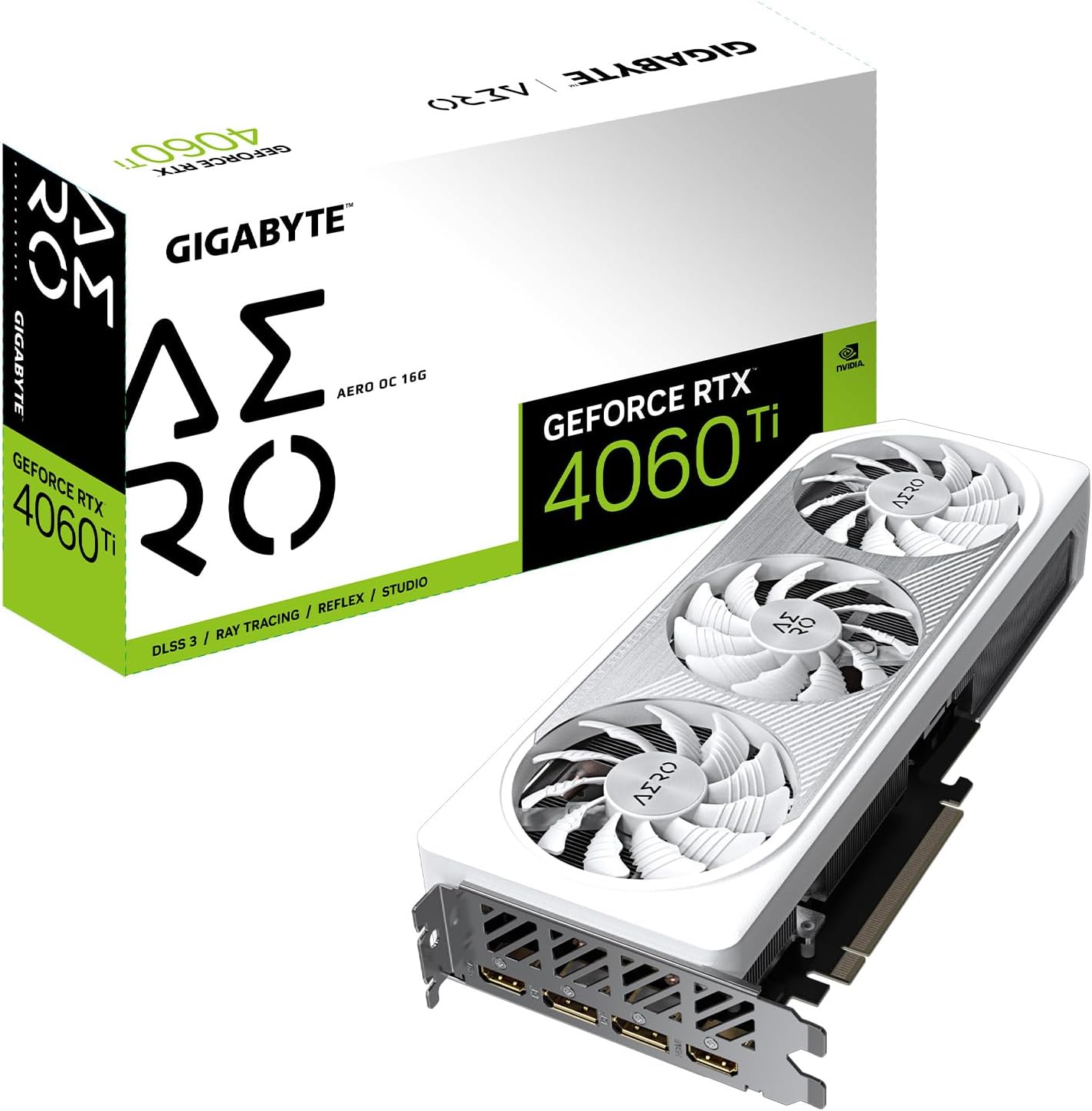
This is the current Amazon listing we validated for this review. For older or niche GPUs, Amazon availability and pricing can drift above the broader market.
- VRAM
- 16GB GDDR6
- Current listing
- ~$900-1,000 linked listing
This article contains affiliate links. We may earn a small commission at no extra cost to you. Specs are verified against the product listing and NVIDIA reference data.
Quick verdict
The RTX 4060 Ti 16GB is a workable but dated 16GB card: enough VRAM for 7B–14B models and image generation, at a low ~165W draw, with full CUDA support. The problem is value — its 128-bit GDDR6 bus makes it slower than newer 16GB alternatives, and the linked listing was roughly $900–1,000 on 2026-07-11. Buy only after comparing a substantially cheaper available 16GB SKU.
The RTX 4060 Ti 16GB occupies an awkward spot in 2026: it has the VRAM that matters for local AI, but it has been superseded by a faster, similarly-priced successor, and its Amazon pricing has drifted far above what it is worth. This review is about when it still makes sense — and when it does not.
For the broader 16GB-versus-24GB decision, see our 16GB vs 24GB VRAM guide.
Quick Verdict
If you find a 4060 Ti 16GB at a substantial discount, it is a capable entry into 16GB local AI: it runs 7B–14B models and image generation at low power with zero CUDA friction. But that “if” is doing heavy lifting. The newer RTX 5060 Ti 16GB has faster GDDR7 memory, although the exact SKU linked there was also out of stock on 2026-07-11. Compare available checkout prices; do not buy either card from a stale tier-list assumption.
Specs That Matter For Local AI
| Spec | RTX 4060 Ti 16GB |
|---|---|
| VRAM | 16GB GDDR6 |
| Memory bus | 128-bit |
| Memory bandwidth | ~288 GB/s |
| TDP | ~165W |
| Architecture | Ada Lovelace (RTX 40-series) |
| Interface | PCIe 4.0 |
The headline is 16GB of VRAM, which is the whole reason to consider this card for local AI. The limitation is memory bandwidth: a 128-bit bus with GDDR6 caps it at roughly 288 GB/s — lower than the newer 5060 Ti 16GB (GDDR7, ~448 GB/s) and far below 24GB cards. Since inference speed scales with bandwidth, the 4060 Ti is capable but not quick.
Real Fit And Limits
- 7B–8B models: Comfortable, with room for context. The card’s natural home.
- 13–14B models: Workable — the 16GB holds them, though the modest bandwidth means it is not fast.
- 30–34B models: No. 16GB cannot hold a 32B model without spilling to system RAM.
- Image generation: 16GB is enough for SDXL and FLUX (FP8), at a relaxed pace.
The honest framing: this is a 7B–14B card like the 5060 Ti, but slower per the narrower memory setup. It does the job; it just does it less quickly than its successor.
Power, Thermals, Noise, And Upgrades
At ~165W the 4060 Ti is efficient and quiet — a reasonable always-on card that does not need an exotic PSU. That efficiency is a genuine plus for a home AI box. If you outgrow 16GB, the upgrade path is a 24GB card (a used RTX 3090).
Pros And Cons
The cards above sum it up: a real 16GB at low power with CUDA, against a bandwidth-limiting 128-bit bus, a faster same-price successor, and inflated listings. The hardware is fine; the value proposition in 2026 is the problem.
Who Should Buy It
- Buy it only if you find it substantially below the linked roughly $900–1,000 range and specifically want a low-power 16GB card for 7B–14B models.
- Skip it at the linked range and compare an available newer 16GB card. The 5060 Ti has faster GDDR7, but its exact linked SKU was out of stock on 2026-07-11. Skip 16GB entirely if you want 30B-class models — that needs 24GB.
16GB — linked price is poor value
Gigabyte RTX 4060 Ti AERO OC 16G
A workable 16GB card, but the linked range was roughly $900–1,000 on 2026-07-11. Compare an available newer 16GB card before buying.
Check current priceFrequently Asked Questions
Is the RTX 4060 Ti 16GB good for local AI?
It is a workable 16GB card for 7B–14B models and image generation at low power, with full CUDA support. The catch is its 128-bit GDDR6 bus is slower than newer 16GB alternatives, and the linked range was roughly $900–1,000 on 2026-07-11. Compare a substantially cheaper available SKU.
RTX 4060 Ti 16GB or RTX 5060 Ti 16GB?
The 5060 Ti 16GB, in almost all cases. Both have 16GB, but the 5060 Ti uses faster GDDR7 (~448 GB/s vs ~288 GB/s) for similar money. The 4060 Ti only makes sense at a real discount.
How much VRAM does the RTX 4060 Ti have, and what can it run?
The 16GB version runs 7B–14B models and image generation (SDXL, FLUX FP8). It cannot run 30B-class models — that needs 24GB. Avoid the 8GB version for local AI entirely.
Why is the RTX 4060 Ti 16GB so expensive on Amazon?
Older GPUs often drift upward on Amazon as stock thins. The linked 4060 Ti 16GB range was roughly $900–1,000 on 2026-07-11; do not pay that without comparing available current-generation 16GB cards.
Is 165W power draw good for an always-on AI box?
Yes — at ~165W the 4060 Ti is efficient and quiet, well suited to a 24/7 home AI server, and far cheaper to run than a 350W+ card. Efficiency is one of its genuine strengths.
Last updated: July 11, 2026. Specs were checked against the product listing and NVIDIA reference data; the linked price range was validated on that date. Performance characteristics reference published specifications, not invented benchmarks.